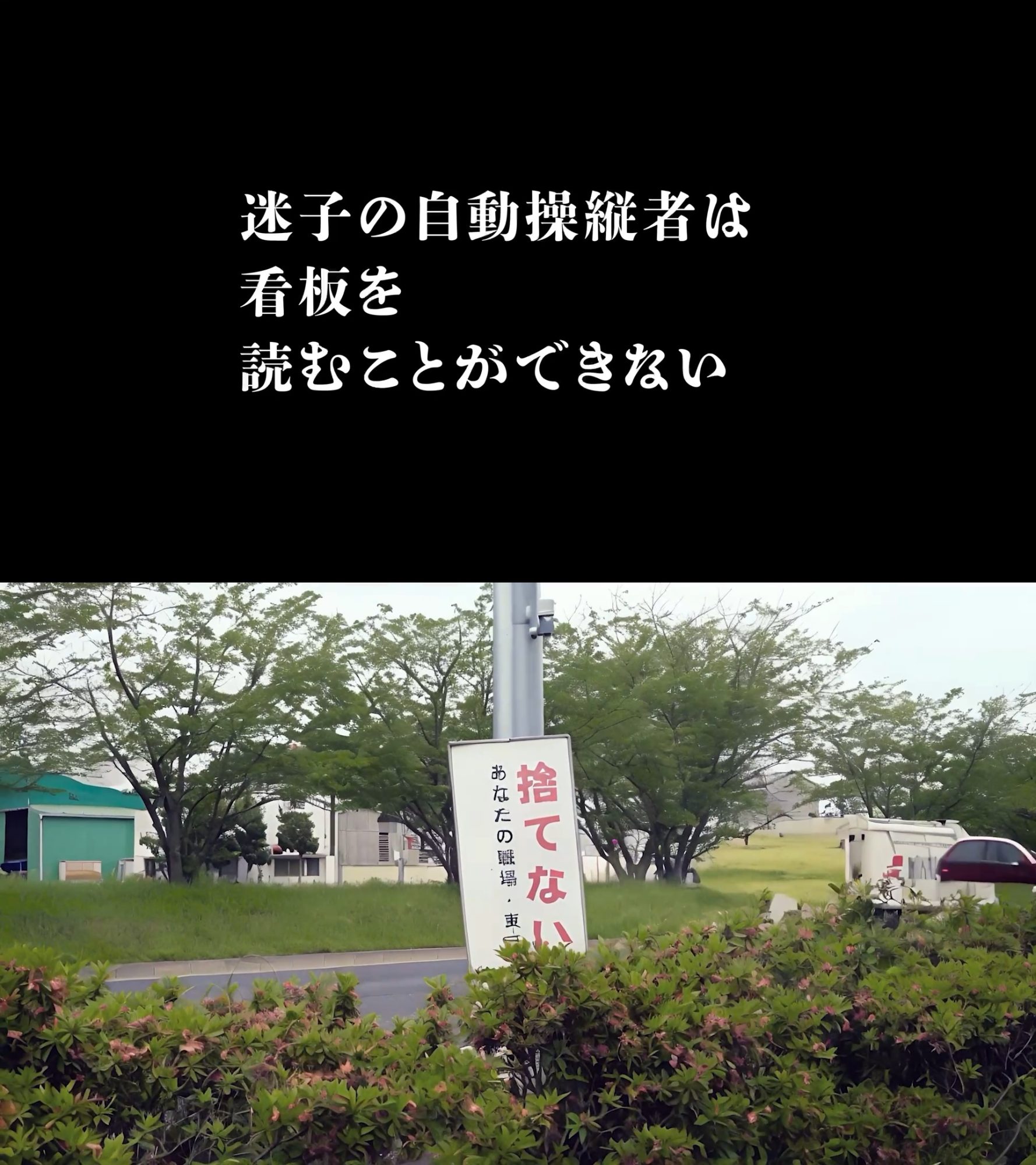
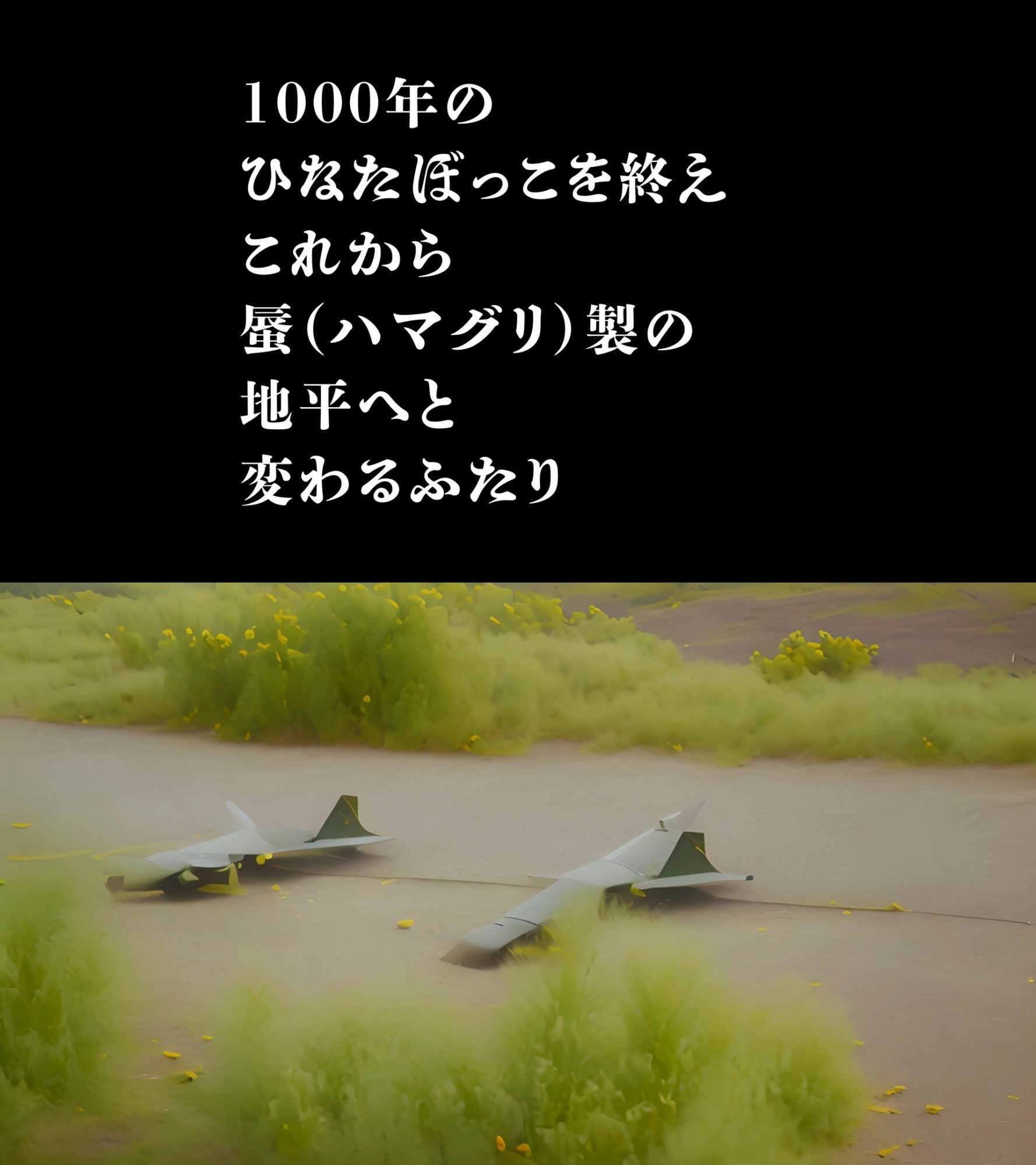
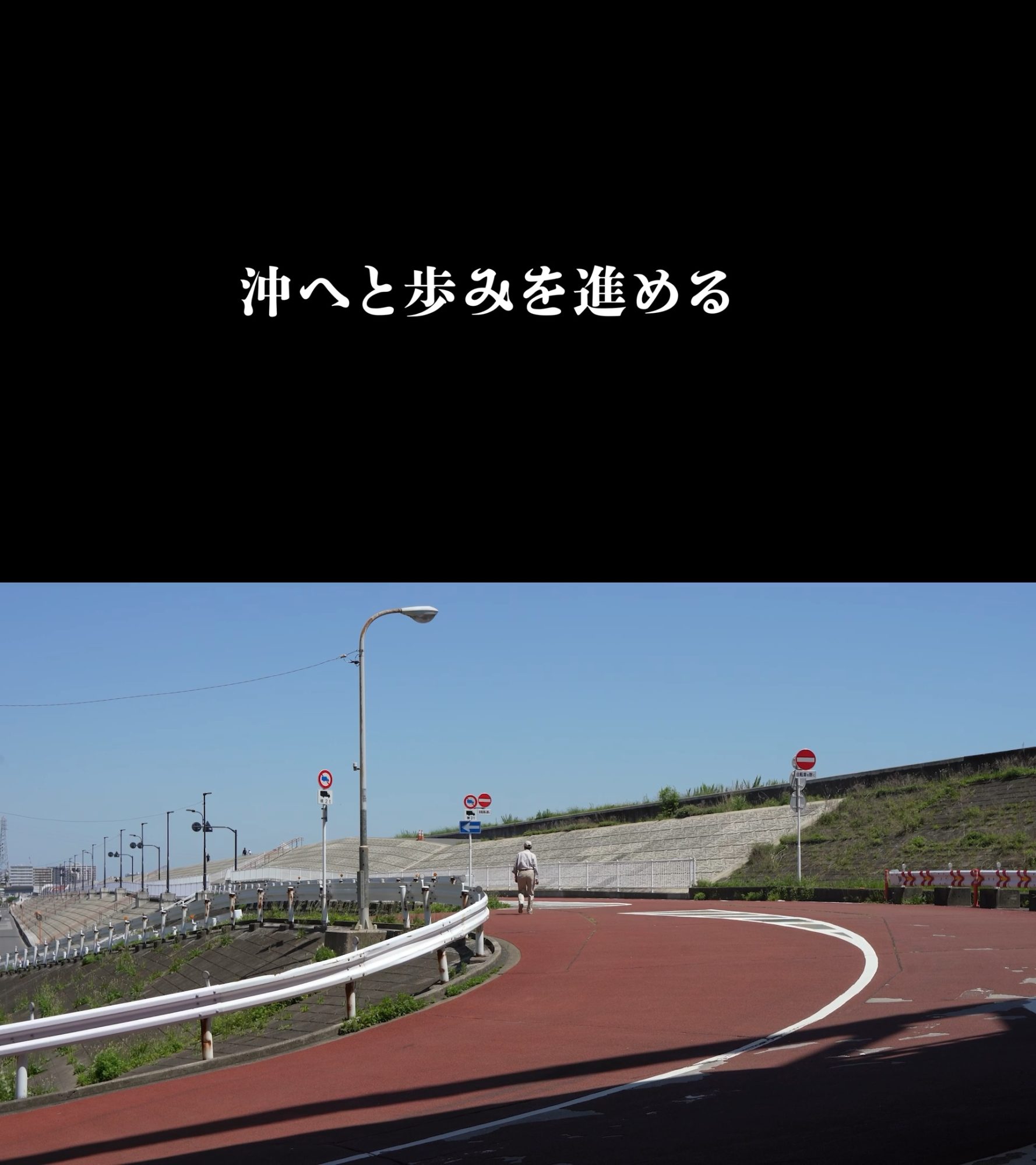
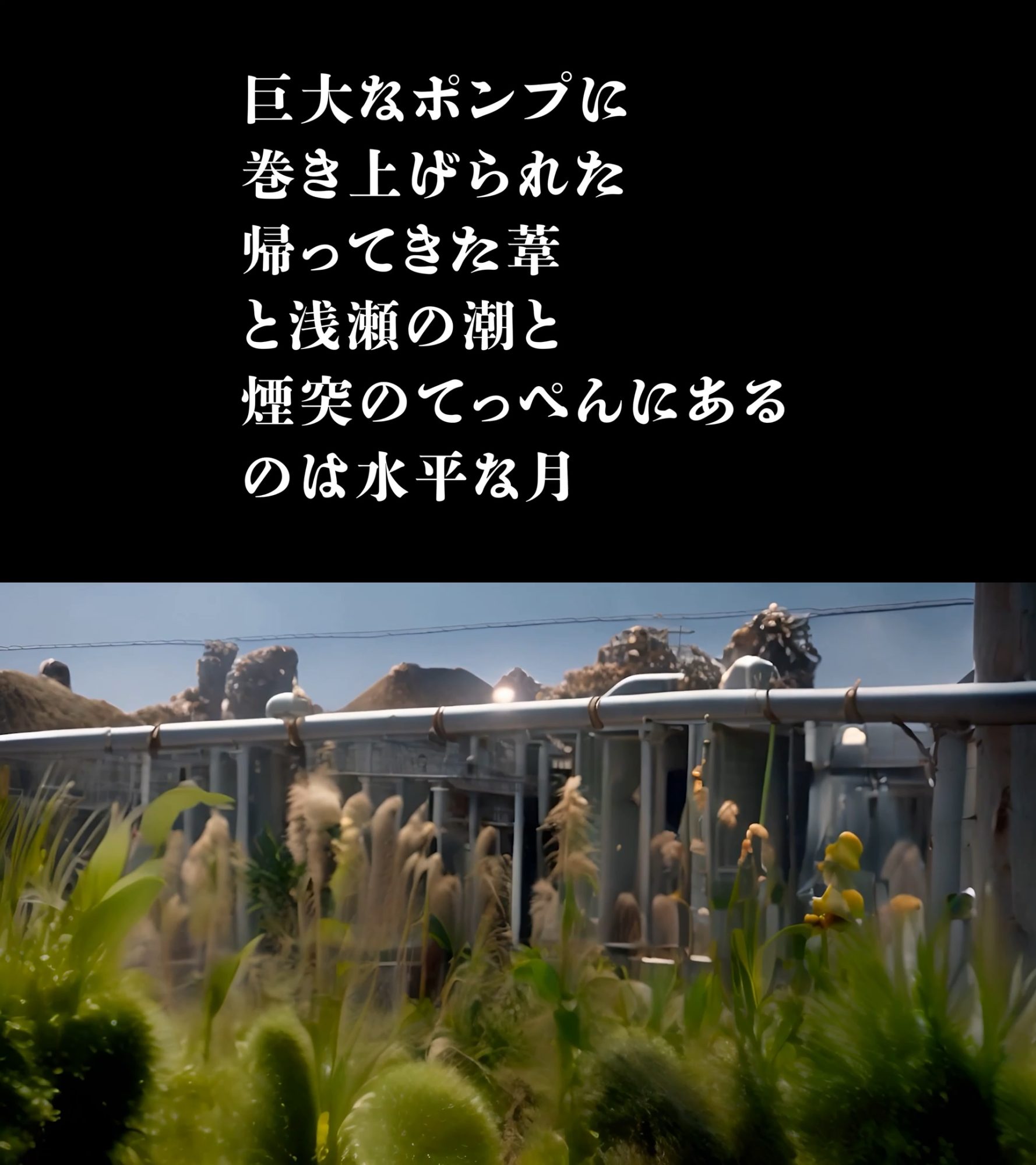
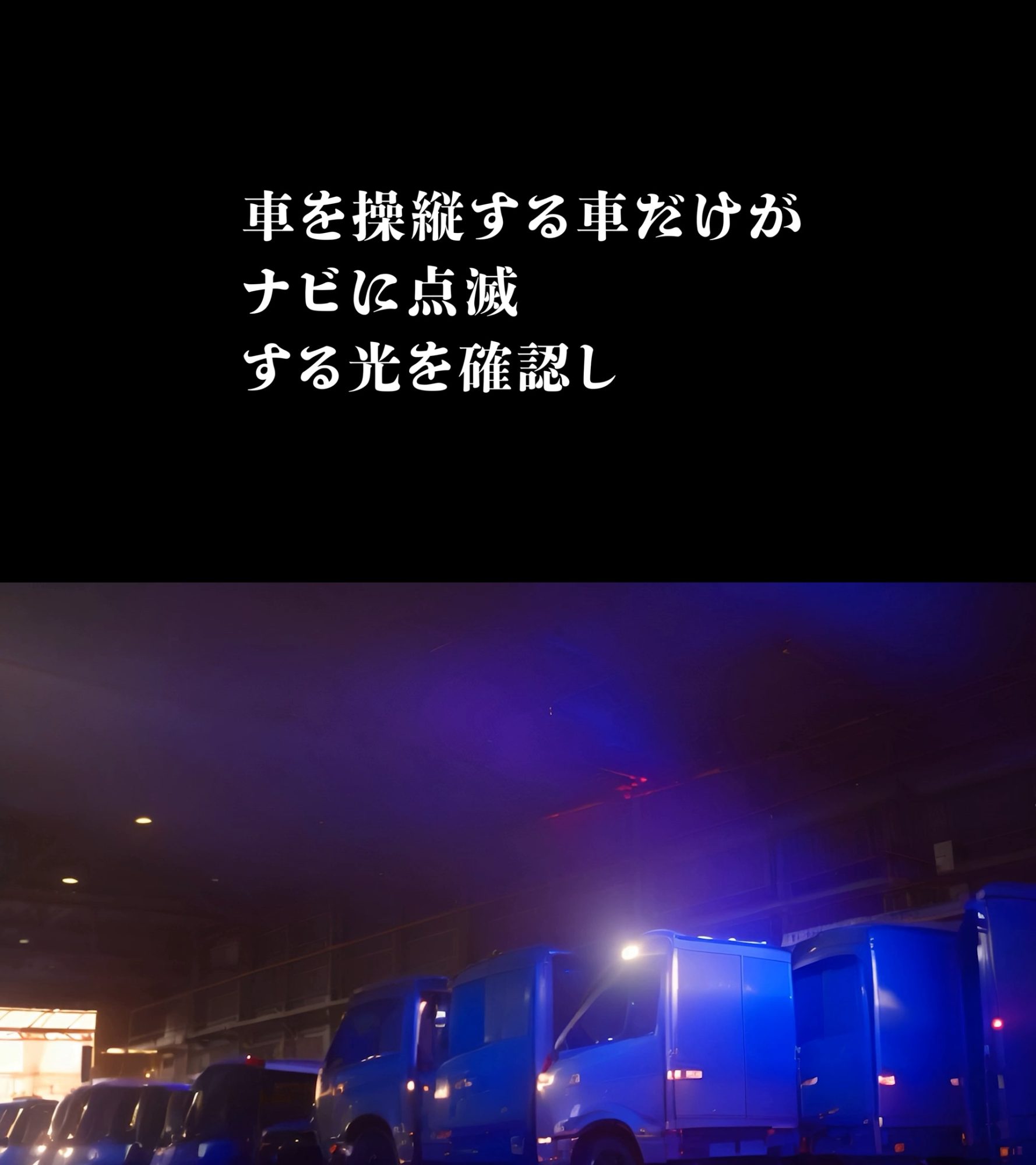
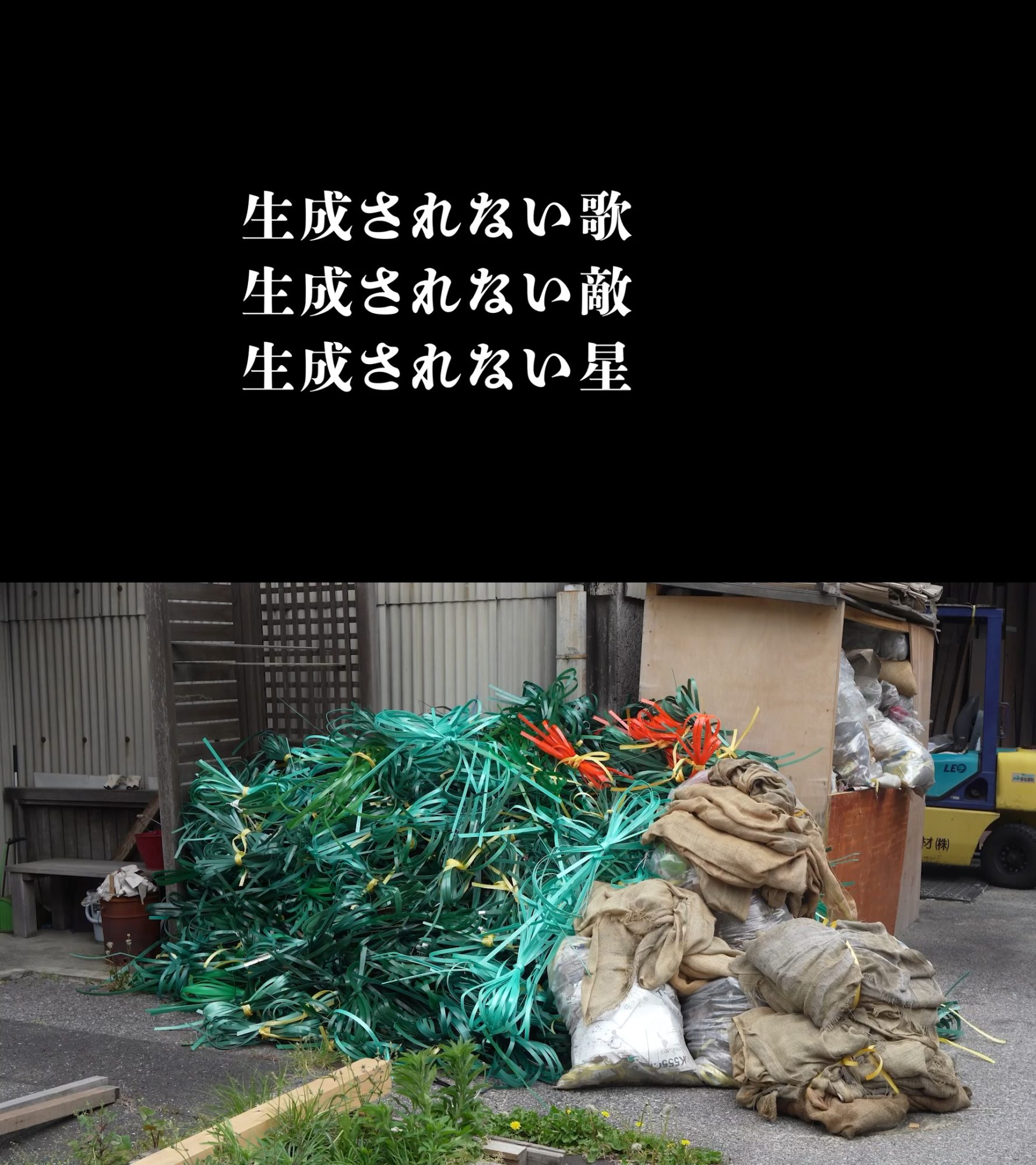
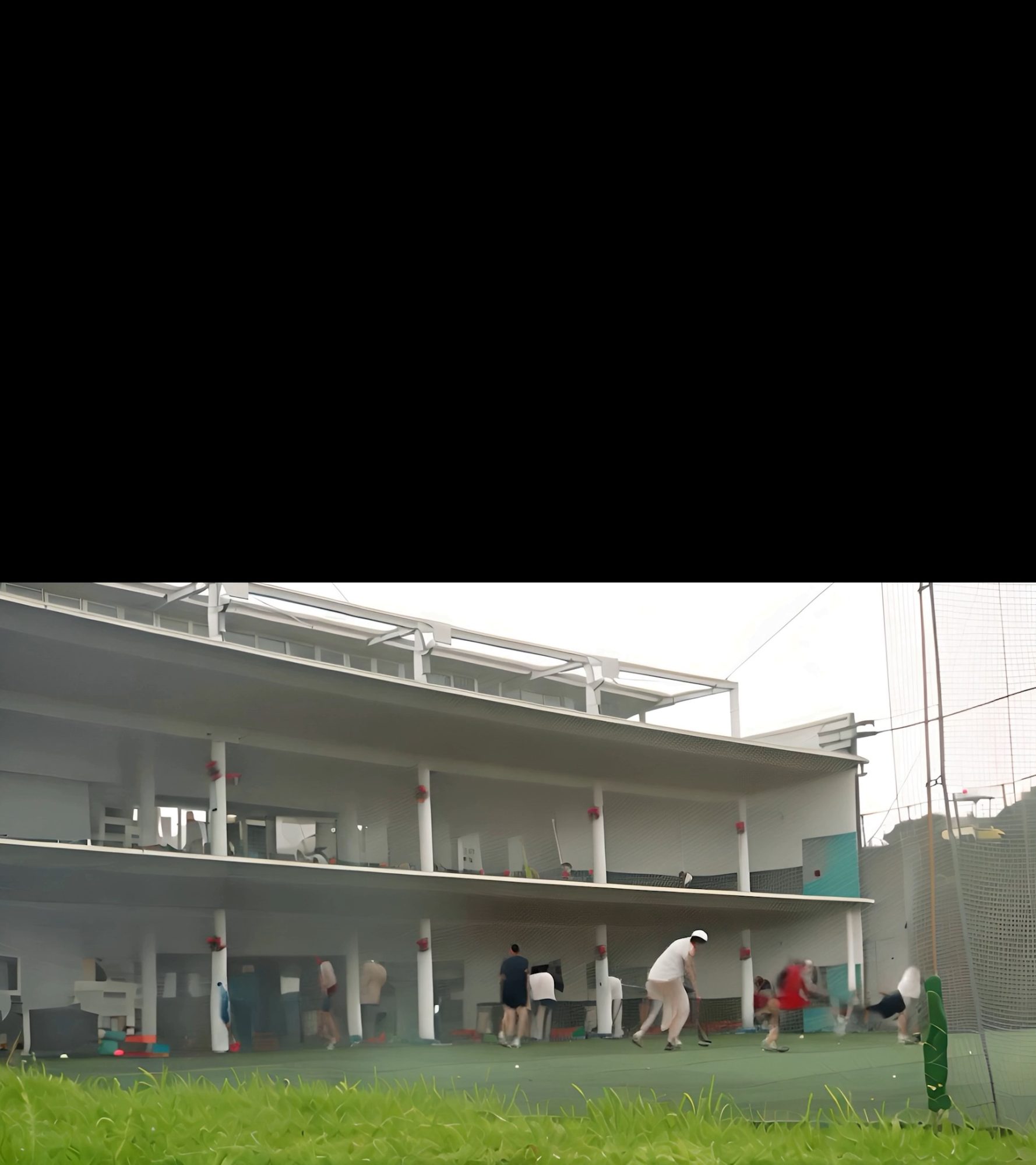
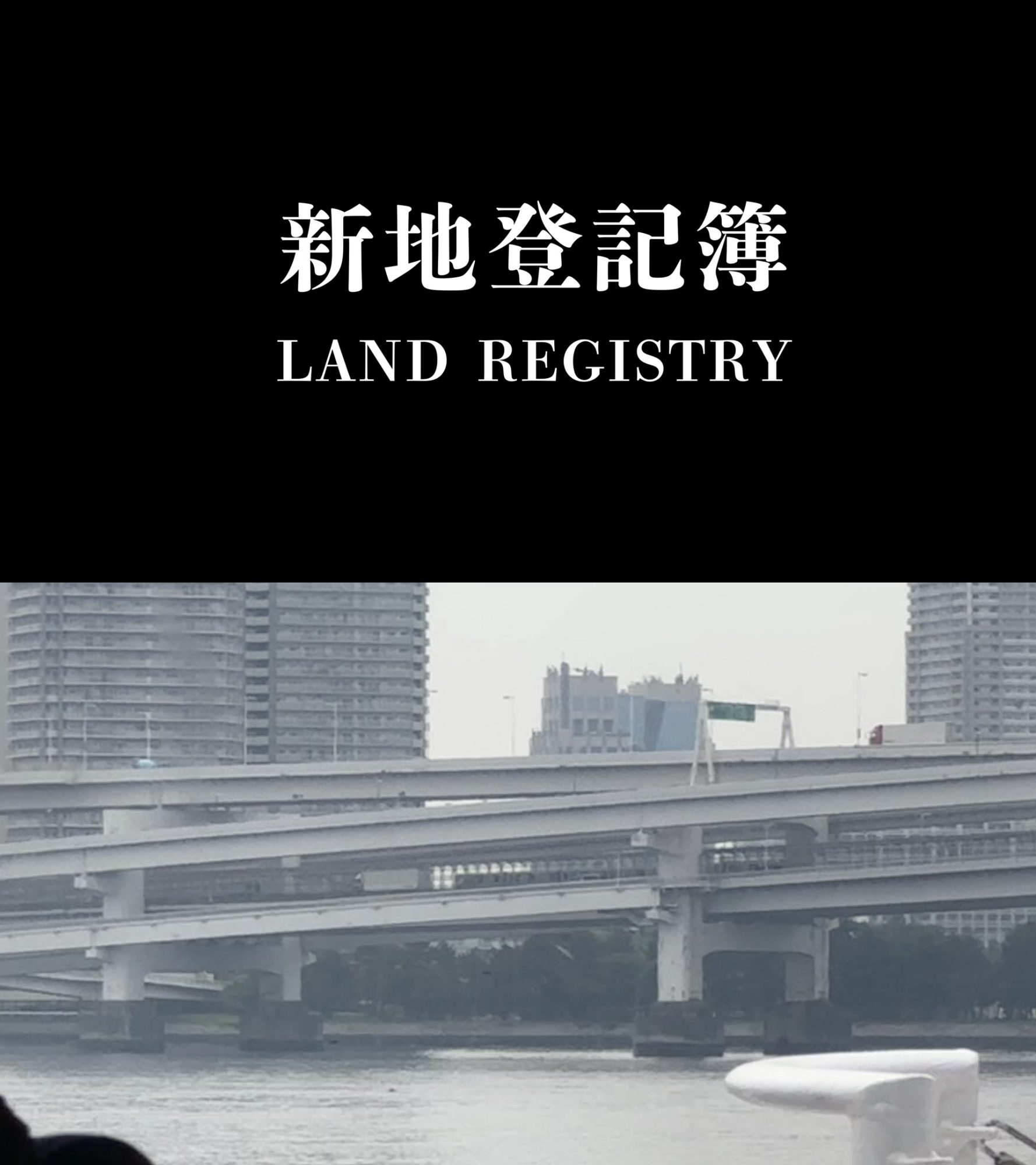
青柳菜摘+細井美裕《新地登記簿》
Natsumi Aoyagi + Miyu Hosoi “Land Registry”
(2024)
1000年前の東京湾人工島(埋立地)の景色は残っているか?
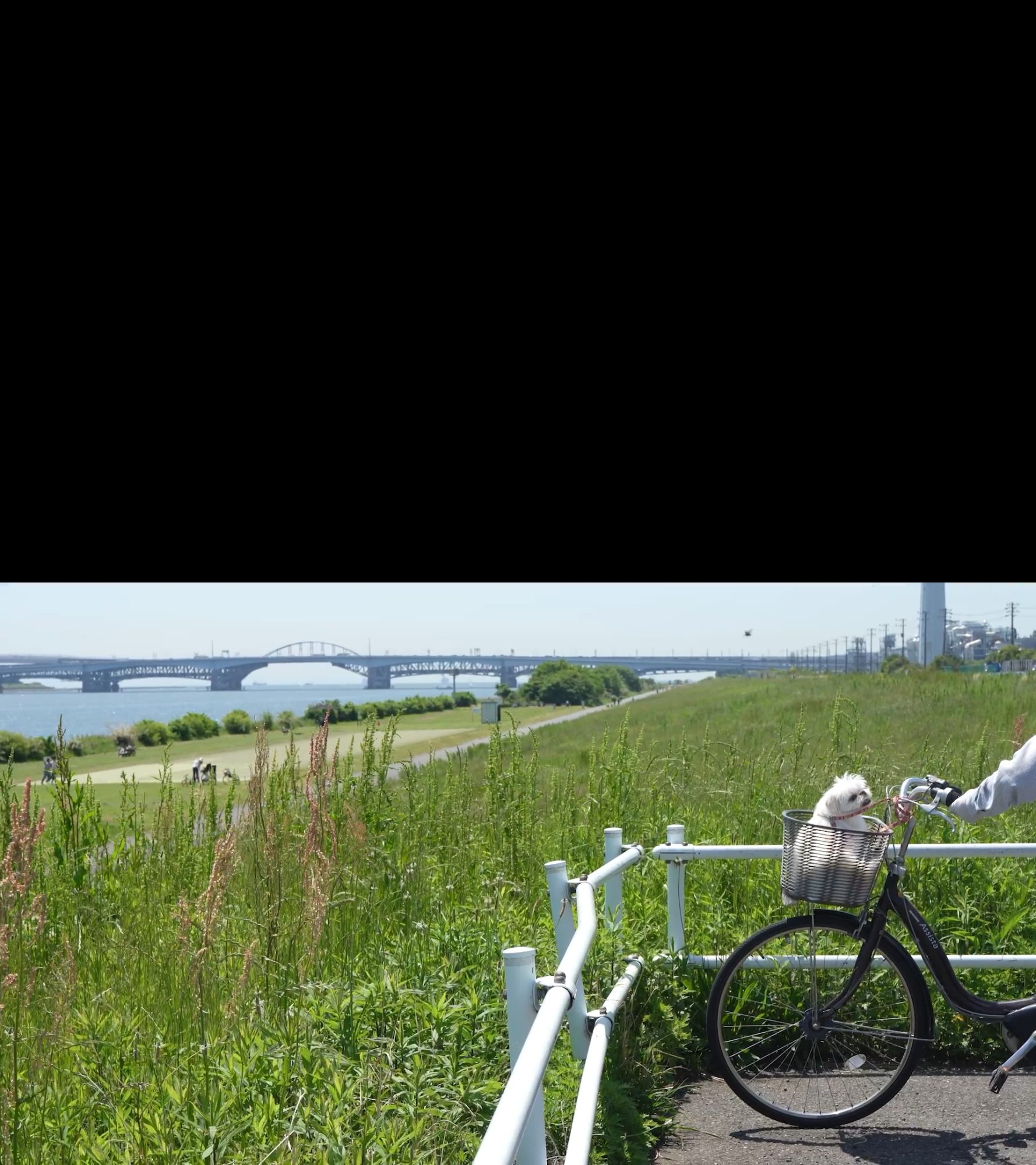
まだ東京とも、江戸とも呼ばれる前、1000年前の「人工島(埋立地)」にはどのような景色があっただろうか。家康の江戸入府から、人口増大と家庭ごみ処分のため約430年前に始まった埋め立ては、元号が令和に変わった今もなお続いている。
岡本太郎の「いこい島」(1957年)を皮切りに、東京湾には人工島を作るプロポーザルが続々と出されることになる。映画『AKIRA』(1988年)の「ネオ東京」は加納久朗が構想した、千葉県の山を原爆で爆破し東京湾を埋め立てるネオ・トウキョウプラン(1959年)を彷彿とさせ、筒井康隆はゴミの島から放射能汚染によってうまれた『かいじゅうゴミイ』(1977年)を描く。
このように、埋め立てにより、想像力とともに驚くべき変化を遂げてきた東京湾人工島の、埋め立てられるはるか前である1000年前に立ち戻ってみたい。現代にしか生きられないわたしたちが、ただただ1000年前を想像することは容易ではない。しかし、「埋め立て」られたこの地の上を歩くことでこそ、それが可能になるのではないか。
Can the landscapes of Tokyo Bay’s artificial islands — its reclaimed land — from 1000 years ago still be found?
What might these “artificial islands” have looked like 1000 years ago, before this place was called Tokyo, or even Edo? The process of land reclamation began approximately 430 years ago, driven by population growth and the need to dispose of household waste following Tokugawa Ieyasu’s entry into Edo — and it continues to this day, even now in the Reiwa era.
Beginning with Taro Okamoto’s “Ikoi-jima” (1957), a series of proposals for artificial islands in Tokyo Bay emerged one after another. The “Neo-Tokyo” of the film AKIRA (1988) evokes the Neo-Tokyo Plan (1959) conceived by Hisao Kano, which envisioned using an atomic bomb to blast away the mountains of Chiba Prefecture and reclaim Tokyo Bay, while Yasutaka Tsutsui’s Kaijuu Gomii (1977) depicts a monster born from radioactive contamination on an island of garbage.
In this way, Tokyo Bay’s artificial islands have undergone remarkable transformations, shaped by both reclamation and imagination. We wish to return to a time 1000 years before any of this reclamation began. For those of us who can only live in the present, simply imagining 1000 years ago is no easy task. And yet — perhaps it is precisely by walking upon this reclaimed land that such imagination becomes possible.
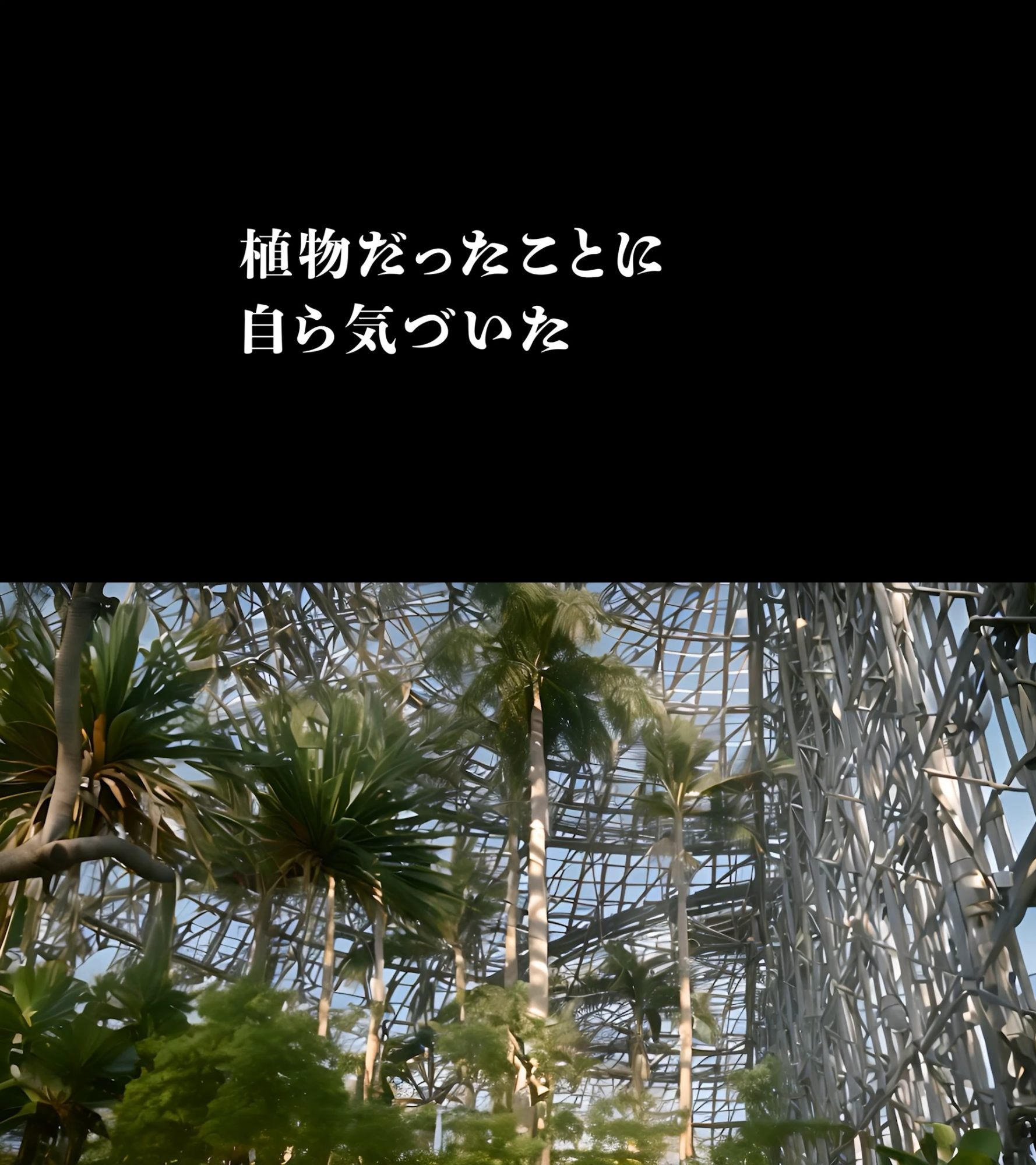
想像することがむずかしいほどの遥か遠くの過去や未来を思い描くことはできるでしょうか。現実的には、過去や未来、あるいは空想の、いまここに存在しない時空の出来事を撮影したり録音したりすることは、現在の技術では困難です。現在では、生成系AIの使用によって、たとえば、誰かがある文章を読んだ時に、脳内に想像されるイメージを取り出すかのように、想像された未来を文字からイメージ化することが可能です。そこには人間の記憶や想像力を超えた、過去や未来を垣間見ることができるかもしれません。
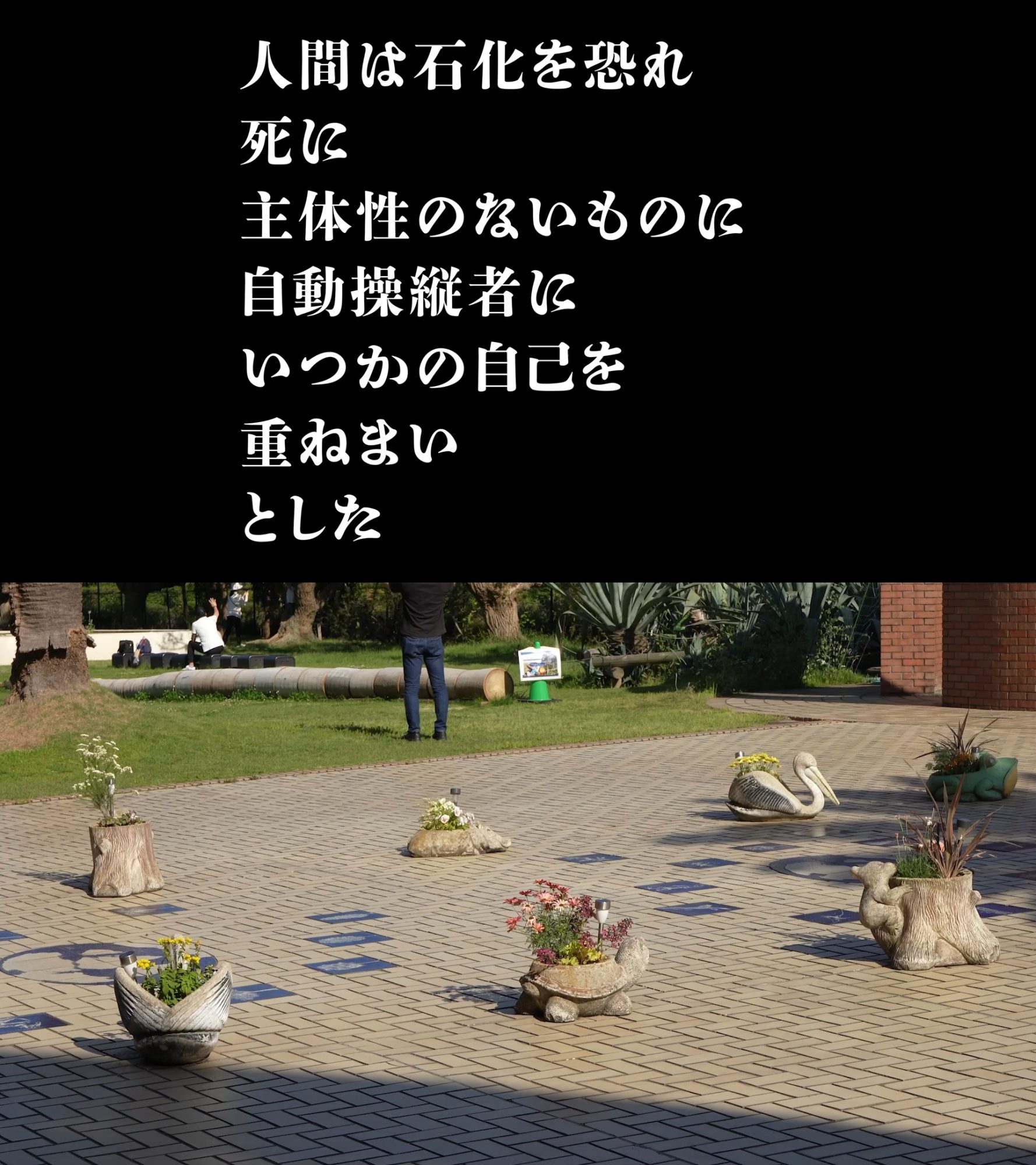
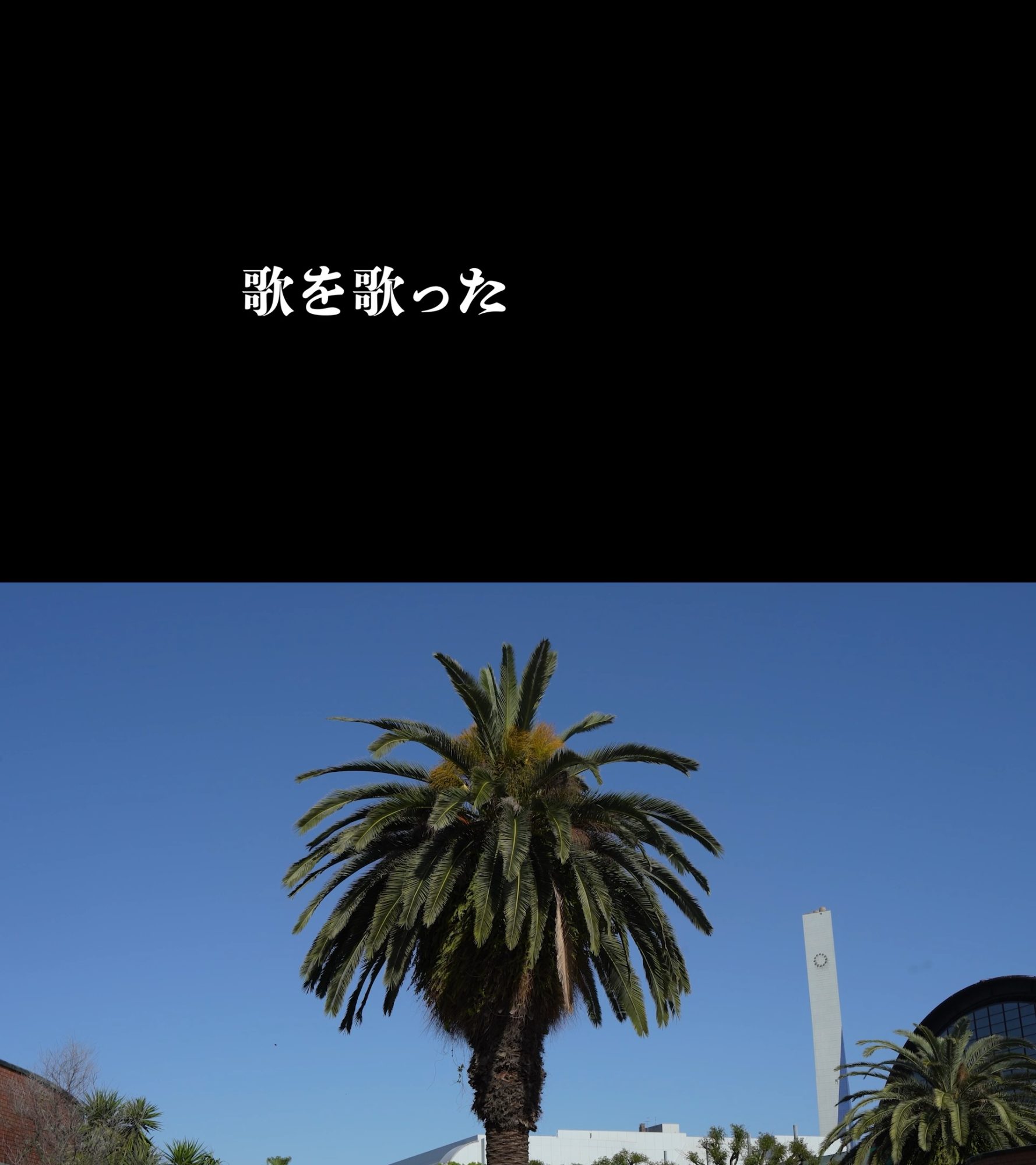
青柳菜摘と細井美裕は、今回初めてのコラボレーションを行ない、インスタレーションを制作しました。ふたりは東京湾の人工島(埋立地)で映像と音声の収録を行ない、それを素材として、現在を起点とした、拡張された現在として、過去と未来を透視させる場を作ることを試みています。それは、現在の東京から遥か遠くの過去や未来を想像することでもあるでしょう。
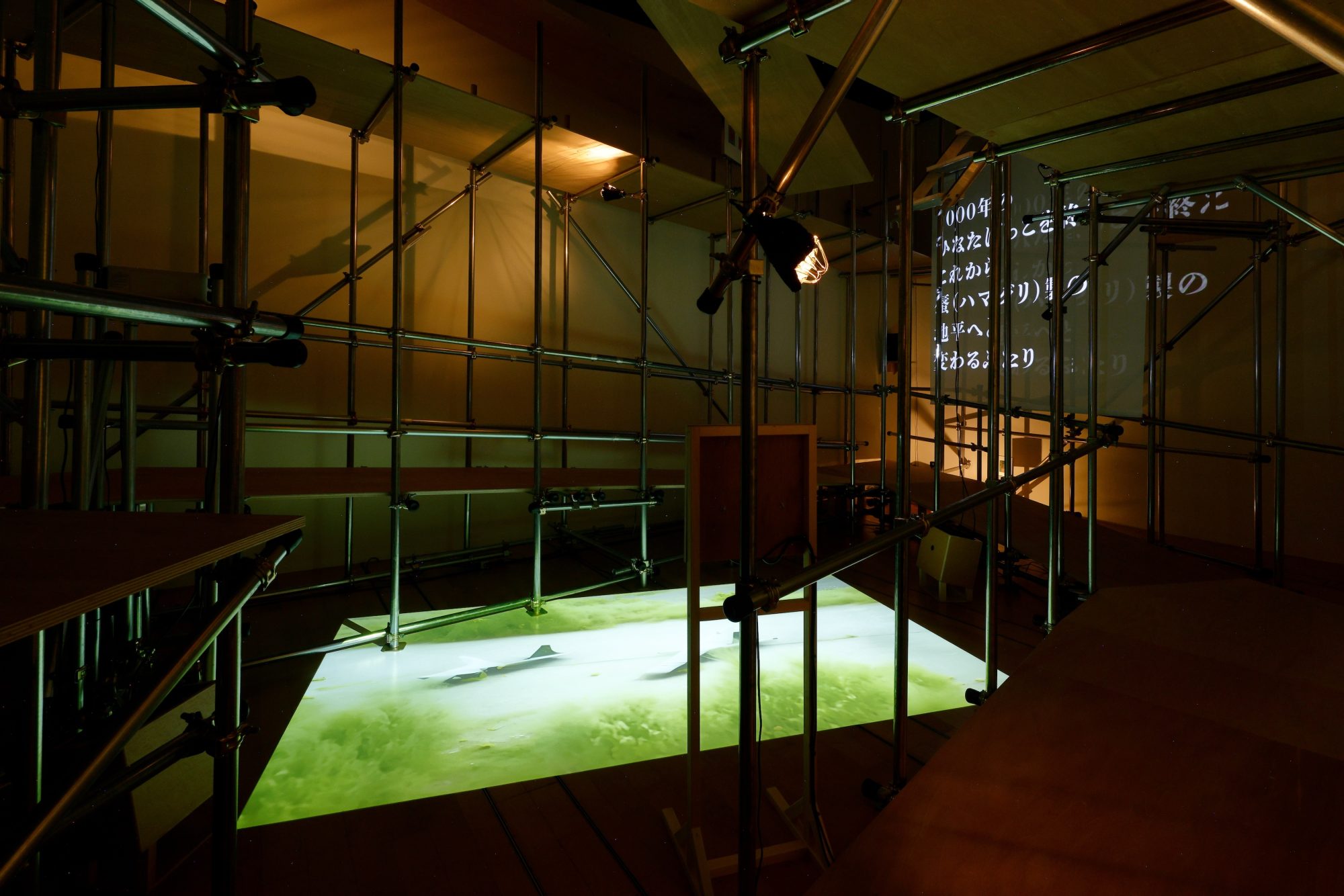
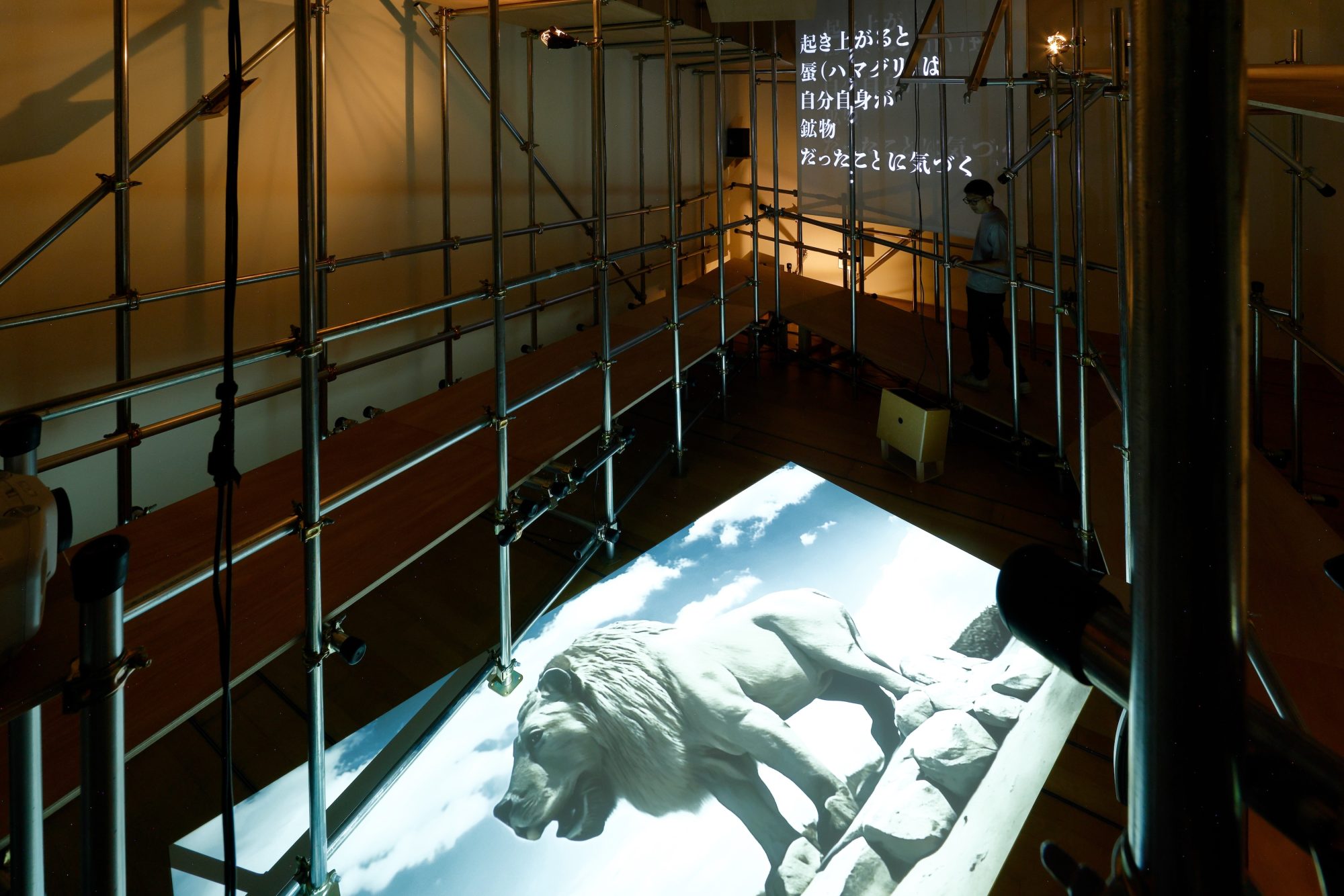
展示室内に造られた構造物は、螺旋状に連続する過去と未来への時間の延長を示唆しています。そこに青柳の映像と詩、細井の音響が、人工的な土地というモチーフにたいして、それぞれのイマジネーションを拮抗させるように、同期しない関係性によって、ユートピアあるいはディストピアとしての、新しい、どこにもない、しかし、どこか抽象化された世界について考えさせる場所のイメージを生成しています。
ドラマトゥルク:和田信太郎
テクニカル・ディレクター:イトウユウヤ
空間構成協働:井上岳(GROUP)
サウンド・エンジニア:奥田泰次
Is it possible to envision a past or future so distant that it is difficult to imagine? In practical terms, capturing or recording events from the past, future, or imaginary spacetime that do not exist here and now is challenging with current technology. Currently, with the use of generative AI, it is possible to visualize imagined futures from text, much like extracting the images that come to mind when someone reads a particular passage. In this way, it may be possible to glimpse the past and future beyond human memory and imagination.
AOYAGI Natsumi and HOSOI Miyu have collaborated for the first time to create an installation for this exhibition. The two have conducted video and audio recordings on an artificial island in Tokyo Bay, using this material to create a space that allows for a glimpse of the past and future, starting from the present as an expanded now. It also involves imagining the distant past and future from the perspective of present-day Tokyo.
The structure created within the exhibition space suggests a spiral extension of time, connecting the past and future. There, AOYAGI’s imagery and poetry, along with HOSOI’s soundscapes, create a space that compels contemplation of a new, abstract world that exists nowhere yet evokes a sense of utopia or dystopia. This is achieved through their asynchronous relationship, allowing each artist’s imagination to resonate against the motif of artificial land.
Dramaturg: WADA Shintaro
Technical director: ITO Yuya
Collaboration in space design: INOUE Gaku (GROUP)
Sound Engineer: OKUDA Taiji